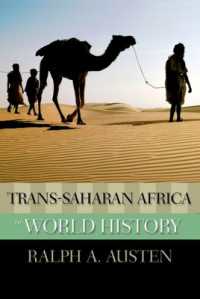
Trans-Saharan Africa in World History (New Oxford World History)

58.92 SGD
会員価格
53.03
English

Singapore Main Store

Available

D15-06 Floor (, )
D15-05 Floor (, )

Product Description

During the heyday of camel caravan traffic--from the eighth century CE arrival of Islam in North Africa to the early twentieth-century building of European colonial railroads that linked the Sudan with the Atlantic--the Sahara was one of the world's great commercial highways, bringing gold, slaves, and other commodities northward and sending both manufactured goods and Mediterranean culture southward into the Sudan. Historian Ralph A. Austen here tells the remarkable story of an African world that grew out of more than one thousand years of trans-Saharan trading. Perhaps the most enduring impact of this trade and the common cultural reference point of trans-Saharan Africa was Islam. Austen traces this faith in its various forms--as a legal system for regulating trade, an inspiration for reformist movements, and a vehicle of literacy and cosmopolitan knowledge. He also analyzes the impact of European overseas expansion, which marginalized trans-Saharan commerce in global terms but stimulated its local growth. Indeed, trans-Saharan culture not only adapted to colonial changes, but often thrived upon them, remaining a potent force into the twenty-first century.


During the heyday of camel caravan traffic--from the eighth century CE arrival of Islam in North Africa to the early twentieth-century building of European colonial railroads that linked the Sudan with the Atlantic--the Sahara was one of the world's great commercial highways, bringing gold, slaves, and other commodities northward and sending both manufactured goods and Mediterranean culture southward into the Sudan. Historian Ralph A. Austen here tells the remarkable story of an African world that grew out of more than one thousand years of trans-Saharan trading. Perhaps the most enduring impact of this trade and the common cultural reference point of trans-Saharan Africa was Islam. Austen traces this faith in its various forms--as a legal system for regulating trade, an inspiration for reformist movements, and a vehicle of literacy and cosmopolitan knowledge. He also analyzes the impact of European overseas expansion, which marginalized trans-Saharan commerce in global terms but stimulated its local growth. Indeed, trans-Saharan culture not only adapted to colonial changes, but often thrived upon them, remaining a potent force into the twenty-first century.
Available to Order

Usually dispatches within 3-5 business days

While every attempt has been made to ensure stock availability, occasionally we may run out of stock at our stores.

日本国内への配送は50.00SGD以上のご注文で無料

Discount is applied at checkout.

Recently Viewed Items

Related Products