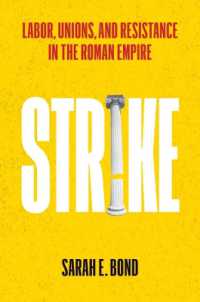
Strike : Labor, Unions, and Resistance in the Roman Empire

64.09 SGD
会員価格
57.69
English

Singapore Main Store

Not Available

D15-04 Floor (, )

Product Description

Historian Sarah E. Bond retells the traditional story of Ancient Rome, revealing how groups of ancient workers unified, connected, and protested as they helped build an empire   A New Yorker Best Book of the Year   “First-rate. . . . A sterling example of historical revisionism.”—Publishers Weekly   From plebeians refusing to join the Roman army to bakers withholding bread, this is the first book to explore how Roman workers used strikes, boycotts, riots, and rebellion to get their voices—and their labor—acknowledged. Sarah E. Bond explores Ancient Rome from a new angle to show that the history of labor conflicts and collective action goes back thousands of years, uncovering a world far more similar to our own than we realize.   Workers often turned to their associations for solidarity and shared identity in the ancient world. Some of these groups even negotiated contracts, wages, and work conditions in a manner similar to modern labor unions. As the world begins to consider the value—and indeed the necessity—of unionization to protect workers, this book demonstrates that we can learn valuable lessons from ancient laborers and from attempts by the Roman government to limit their freedom.


Historian Sarah E. Bond retells the traditional story of Ancient Rome, revealing how groups of ancient workers unified, connected, and protested as they helped build an empire A New Yorker Best Book of the Year “First-rate. . . . A sterling example of historical revisionism.”—Publishers Weekly From plebeians refusing to join the Roman army to bakers withholding bread, this is the first book to explore how Roman workers used strikes, boycotts, riots, and rebellion to get their voices—and their labor—acknowledged. Sarah E. Bond explores Ancient Rome from a new angle to show that the history of labor conflicts and collective action goes back thousands of years, uncovering a world far more similar to our own than we realize. Workers often turned to their associations for solidarity and shared identity in the ancient world. Some of these groups even negotiated contracts, wages, and work conditions in a manner similar to modern labor unions. As the world begins to consider the value—and indeed the necessity—of unionization to protect workers, this book demonstrates that we can learn valuable lessons from ancient laborers and from attempts by the Roman government to limit their freedom.
Available to Order

Usually dispatches within 3-4 weeks

While every attempt has been made to ensure stock availability, occasionally we may run out of stock at our stores.

日本国内への配送は50.00SGD以上のご注文で無料

Discount is applied at checkout.

Recently Viewed Items

Related Products