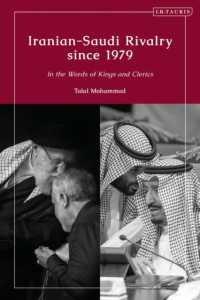
Iranian-Saudi Rivalry since 1979 : In the Words of Kings and Clerics

65.40 SGD
Member Price
58.86
English

Singapore Main Store

Not Available

D15-06 Floor (, )

Product Description

The fraught relationship between Saudi Arabia and Iran is usually attributed to sectarian differences, even by the states’ own elites. However, this book shows that in their official speeches, newspaper editorials and Friday sermons, these elites use sectarian and nationalist references and tropes to denigrate each other and promote themselves in the eyes of their respective constituencies in the region. Talal Mohammad, who is fluent in both Arabic and Persian, examines Saudi-Iranian rivalry using discourse analysis of these religious, political and journalistic sources. Tracing what has been produced since 1979 in parallel, he argues for a consistent pattern of mutual misrepresentation, whereby each frames its counterpart as the ‘Other’ to which a specific political agenda can be justified and advanced. The book covers key events including the Iranian Revolution, the invasion of Kuwait in 1990, the Taliban war, the fall of Saddam, the Arab Spring, the rise of Mohammed bin Salman, and the war on ISIS. While until now Saudi-Iranian rivalry has been understood in primarily sectarian or geopolitical terms, the author argues here that the discursive othering serves as a propagandist function that supports more fundamental political and geopolitical considerations.


The fraught relationship between Saudi Arabia and Iran is usually attributed to sectarian differences, even by the states' own elites. However, this book shows that in their official speeches, newspaper editorials and Friday sermons, these elites use sectarian and nationalist references and tropes to denigrate each other and promote themselves in the eyes of their respective constituencies in the region.

Talal Mohammad, who is fluent in both Arabic and Persian, examines Saudi-Iranian rivalry using discourse analysis of these religious, political and journalistic sources. Tracing what has been produced since 1979 in parallel, he argues for a consistent pattern of mutual misrepresentation, whereby each frames its counterpart as the 'Other' to which a specific political agenda can be justified and advanced. The book covers key events including the Iranian Revolution, the invasion of Kuwait in 1990, the Taliban war, the fall of Saddam, the Arab Spring, the rise of Mohammed bin Salman, and the war on ISIS. While until now Saudi-Iranian rivalry has been understood in primarily sectarian or geopolitical terms, the author argues here that the discursive othering serves as a propagandist function that supports more fundamental political and geopolitical considerations.
Available to Order

Usually dispatches within 10-14 business days

While every attempt has been made to ensure stock availability, occasionally we may run out of stock at our stores.

Free domestic shipping on orders over 50.00SGD

Discount is applied at checkout.

Recently Viewed Items

Related Products